Drywall construction, insulation with wood fibre insulation and fibre cement walls with rock wool insulation.
The redevelopment and restoration of the concierge area in a residential building was carried out in a series of phases, which are listed below.
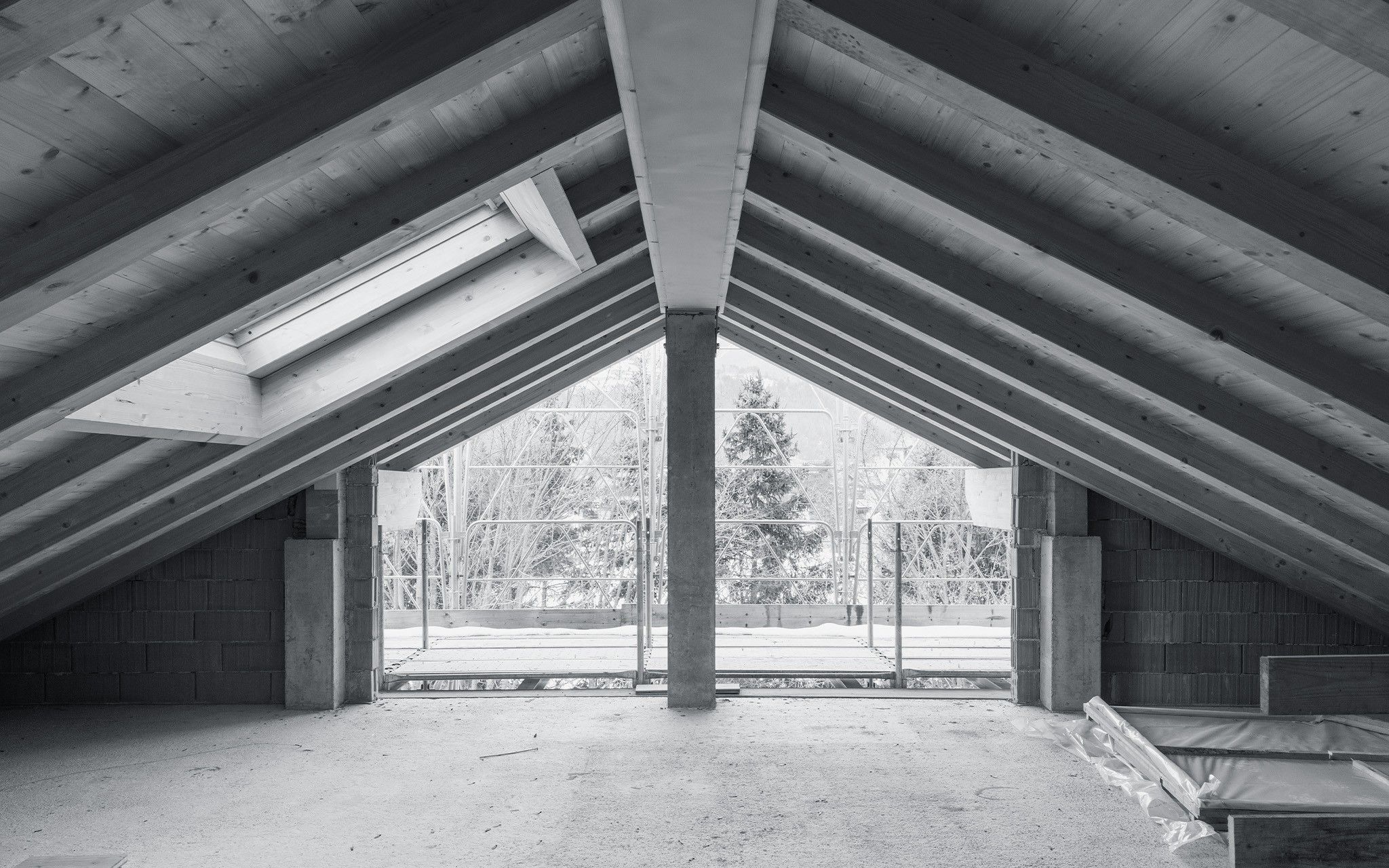
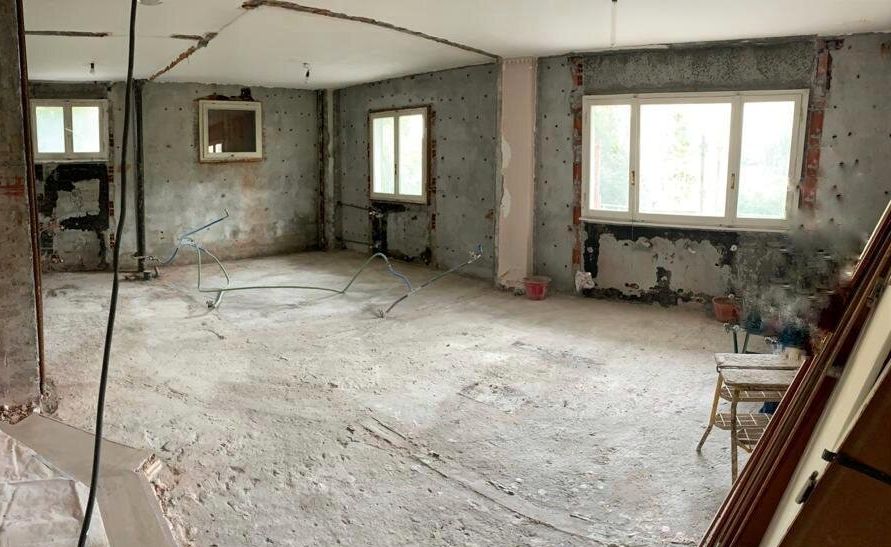
The first step was to demolish the interior to restore it to its original state. In particular, the interior partitions and subfloors were demolished. The following image shows the state of the construction site once the interior demolition was complete.
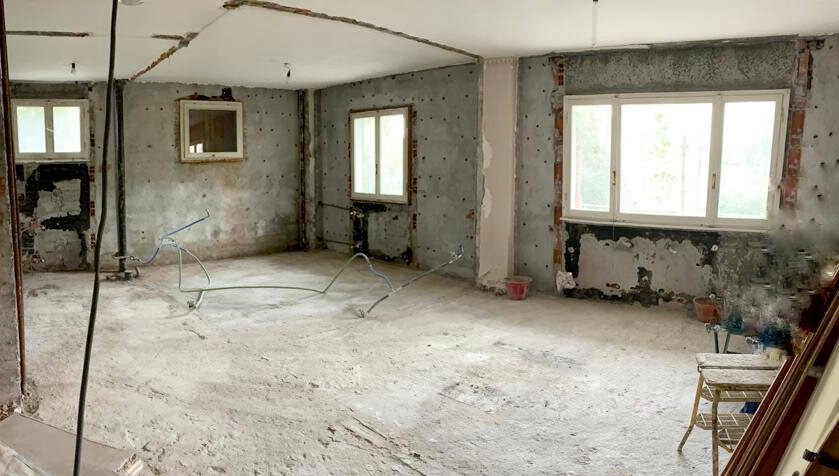
Next, the insulating layers for the internal cladding were studied. A choice was made from among the various options available on the market, including: traditional insulation (EPS), low-thickness heat-reflective insulation, low-thickness nanotechnology insulation, vacuum insulation and bio-sustainable insulation such as wood fibre. During the selection phase, technical advice was provided by the supplier Biomarket in Talamona. After a careful cost/benefit analysis, a sustainable choice at a competitive price was made, namely the application of internal cladding made of wood fibre, coated internally with a vapour barrier layer. It is important to note that the internal cladding was installed ensuring its continuity and turned up to the ceiling to solve the corresponding thermal bridge.
The situation at the end of the installation of the internal cladding can be seen in the following image.
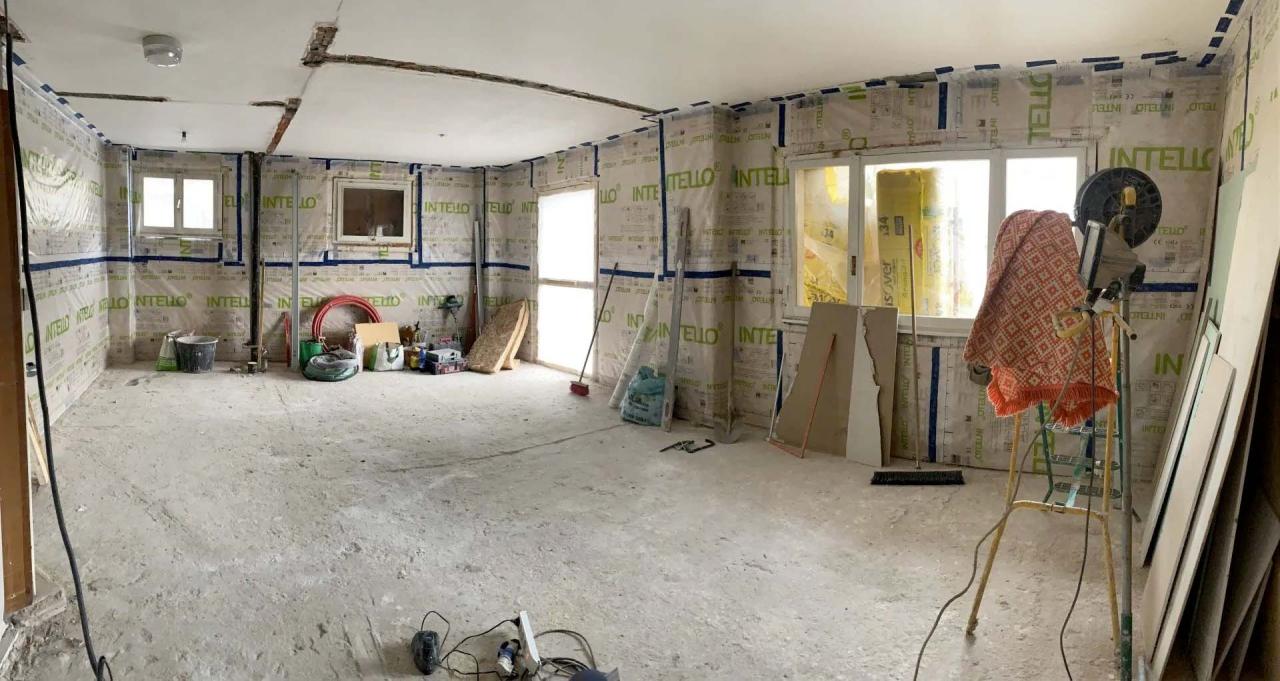
At this stage of the work, the construction site continued with the installation of an insulating layer on the floor to reduce heat loss to the unheated space below. The XPS thermal insulation layer was also laid as a base for the subsequent underfloor heating system. For the internal walls and counter walls, a “dry” structure was chosen, with rock wool insulation in between and external cladding with fibre cement panels. This solution allowed for rapid installation and easy integration of the systems.
Below is the status of the work once the floor insulation layer has been completed.
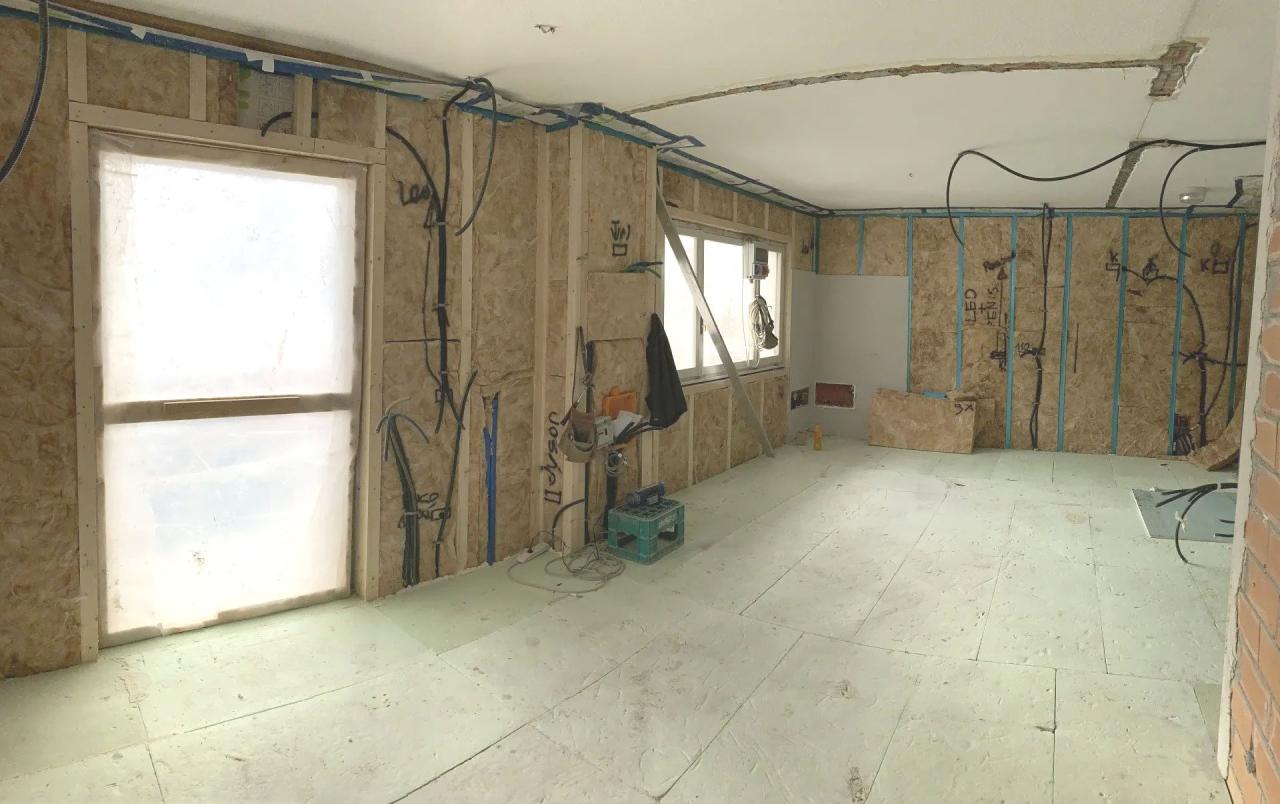
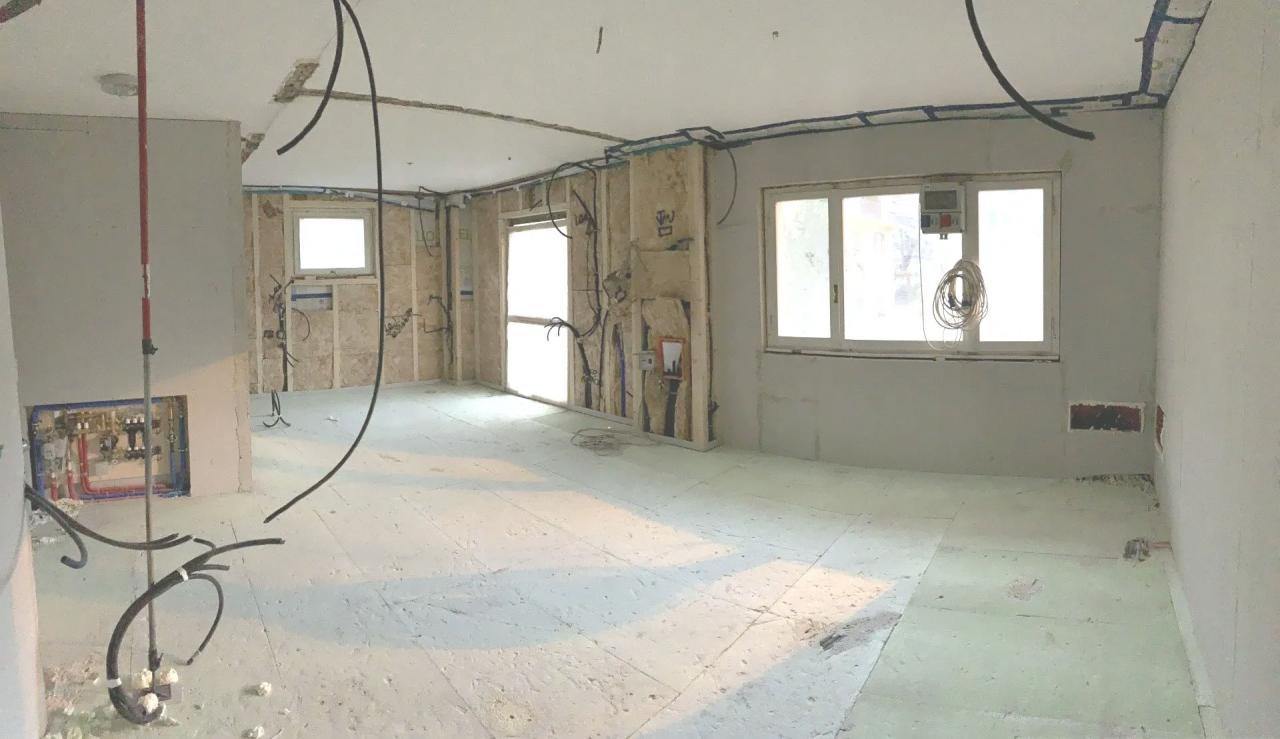
Next, we show the progress of the work once the walls have been partially completed and the low-thickness, high-transmittance substrate covering the underfloor heating has been installed.
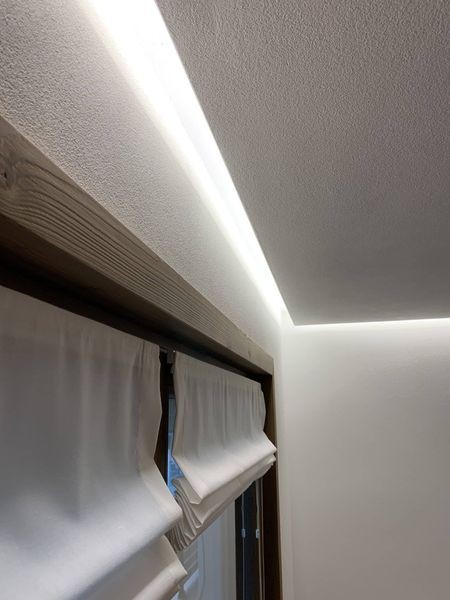
At this stage of the work, the insulated internal false ceiling was also installed.
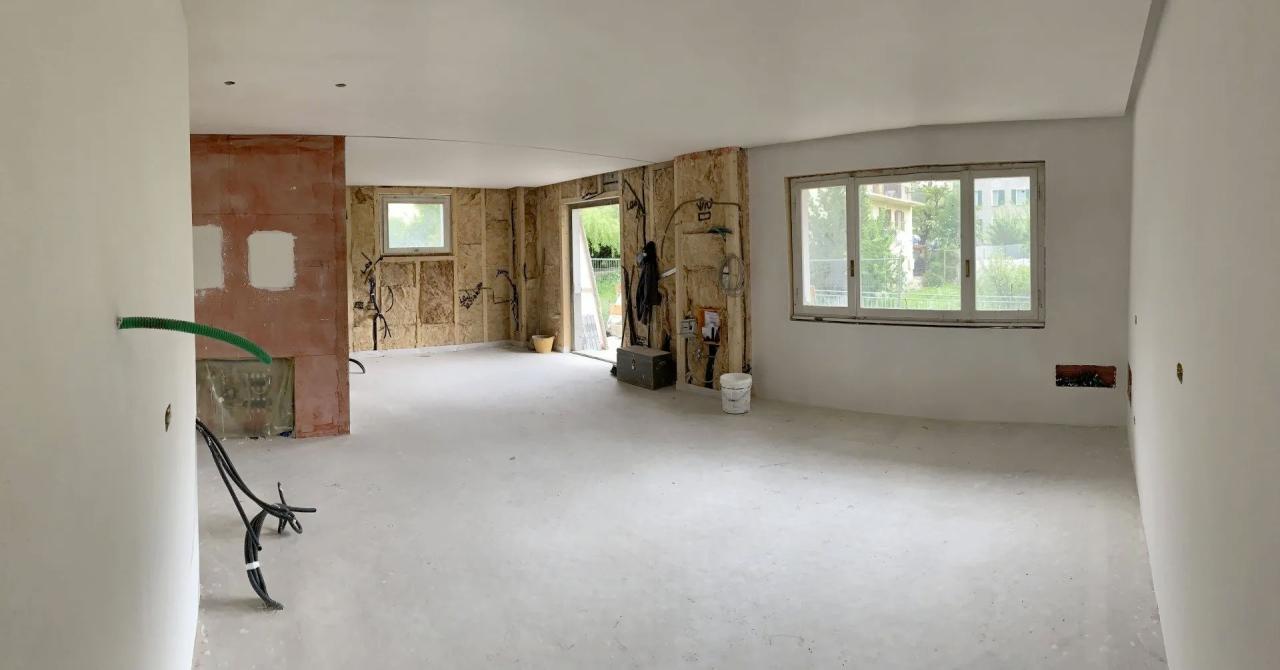
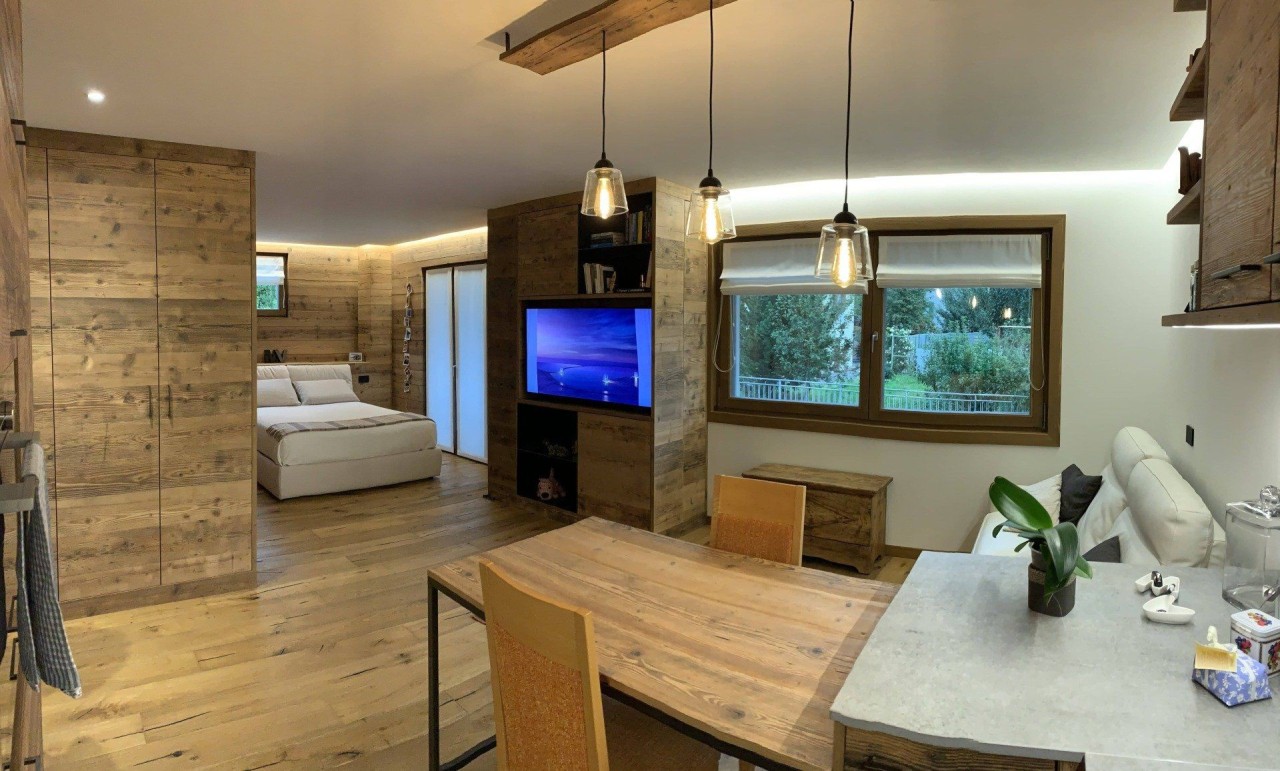
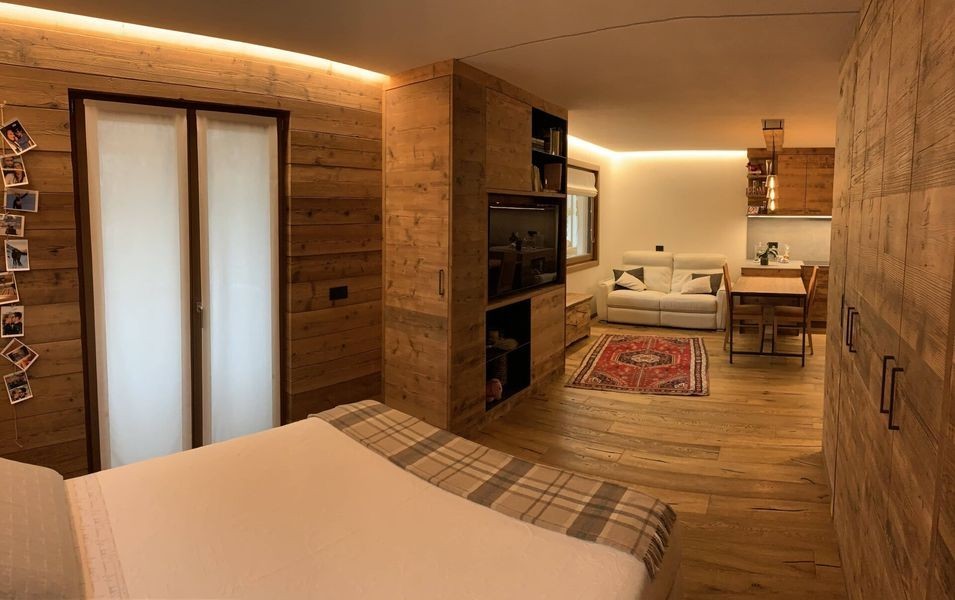
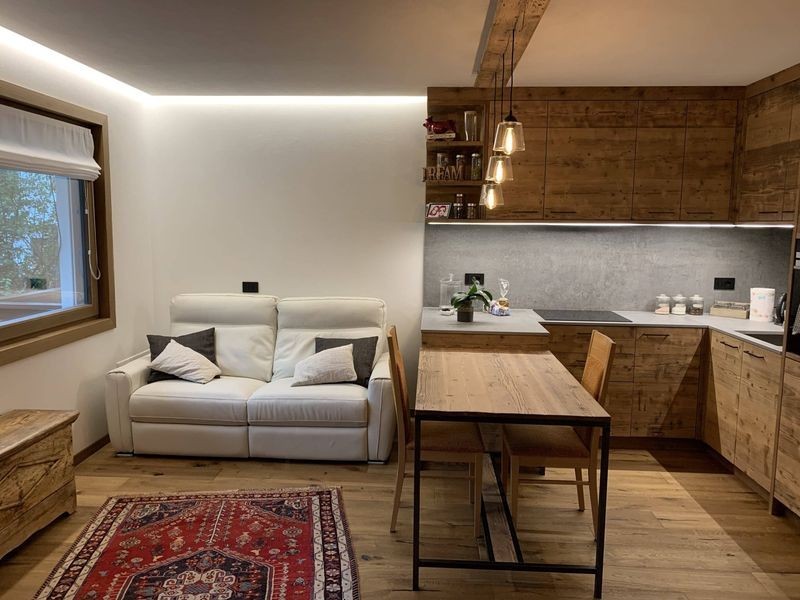
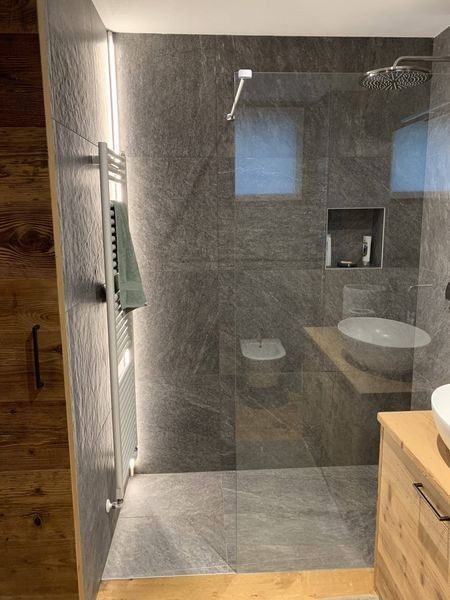
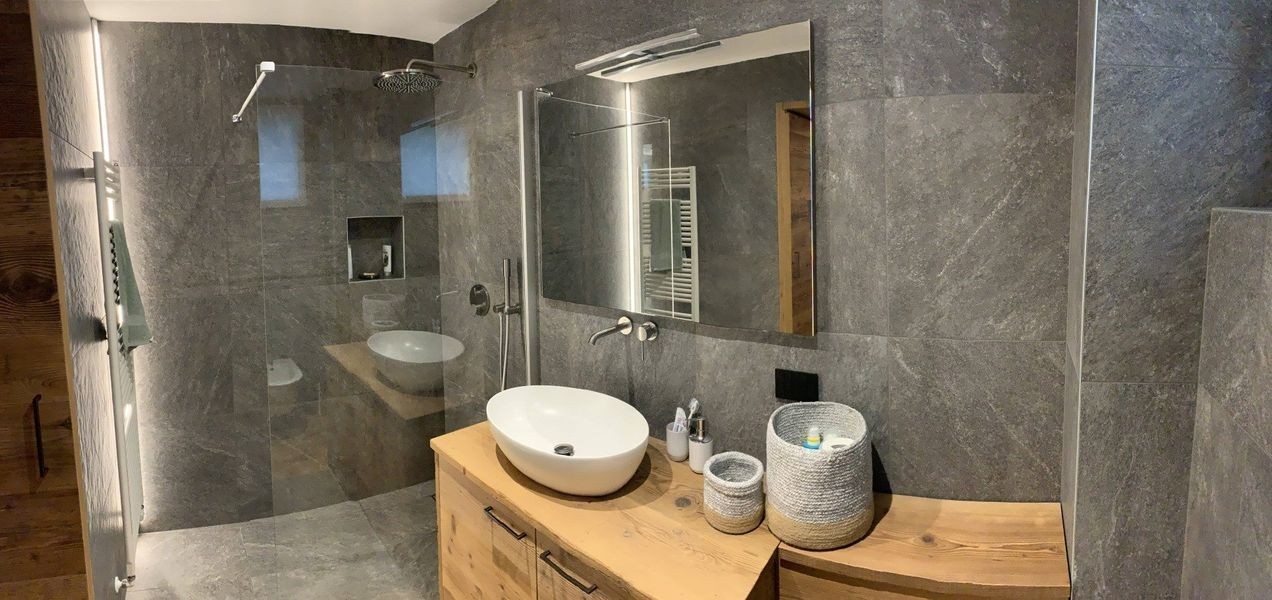
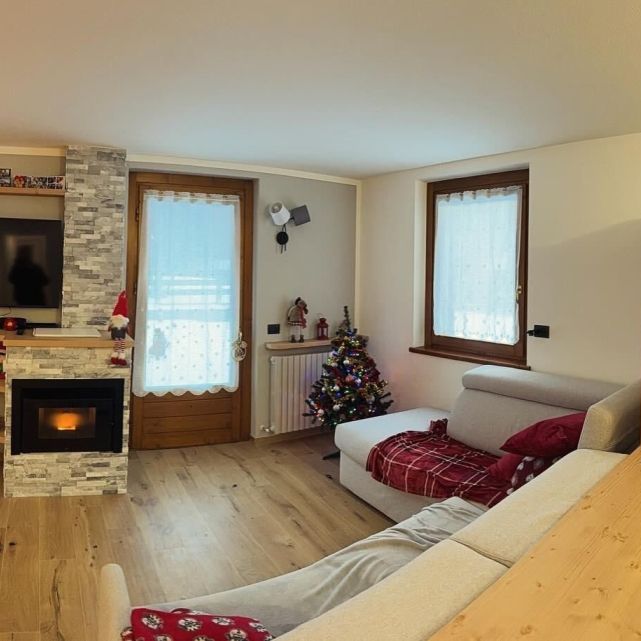
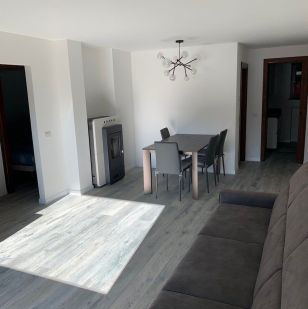
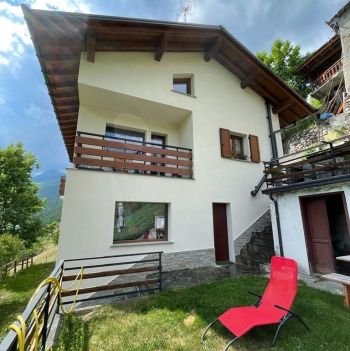
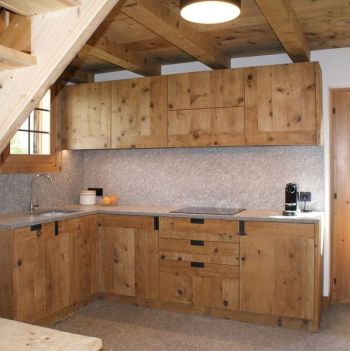
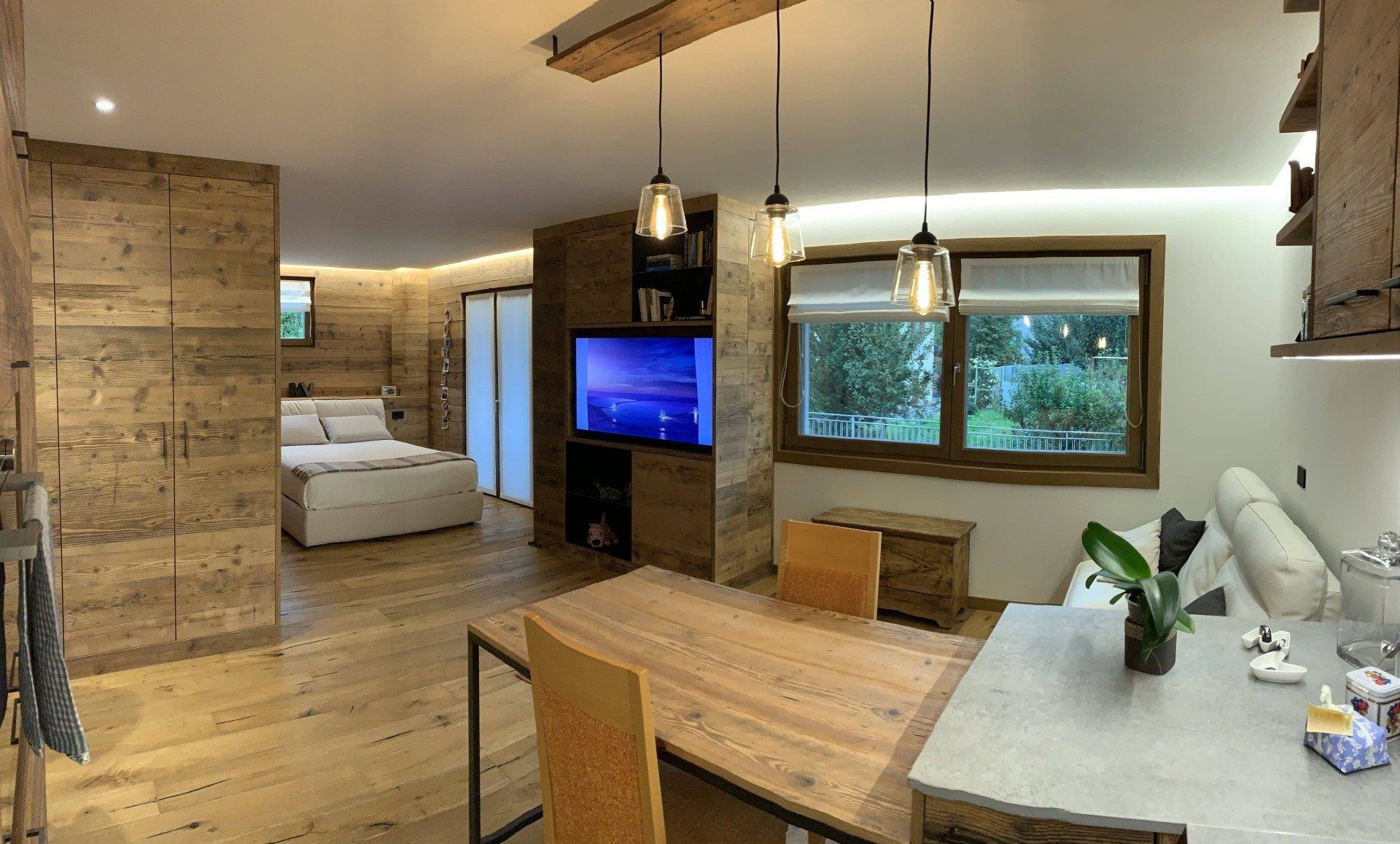
Upon completion of the work described above, the interior finishes were completed to achieve the final result shown below. The work was carried out in collaboration with local companies and craftsmen, in particular MobilArt of Bormio.